Ontology
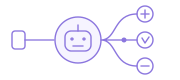
Which objects are involved, and how are they related?
Customer → places → Order
Connect business concepts and relationships to the metrics and data behind them. With Datus and DOSI, agents can work through explicit business meaning—and your team can inspect the path to an answer.
An ontology for AI agents describes the concepts, properties, and relationships in a business domain. It gives an agent explicit vocabulary for interpreting a question. In Datus, that vocabulary connects to semantic models and source mappings, so supported questions can reach data through DOSI.
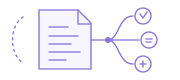
Which objects are involved, and how are they related?
Which metrics, dimensions, and calculations answer the question?
Which source fields and relationships give those concepts meaning?
In this Northstar demo, select a concept to explore its relationships and mapped properties. Switch to lineage to trace source data, or execution to inspect recorded SQL and results.
Prepared demo: ontology and mappings require team review.
Explore Datus StudioDatus Agent uses the ontology to navigate concepts. DOSI resolves supported paths through a mapped semantic model and plans the query. Teams can inspect the generated SQL and its underlying definitions.
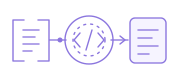
Ontology names the business concepts and relationships. The semantic model defines metrics, dimensions, and source mappings in compatible Apache Ossie definitions. DOSI connects supported ontology paths to those definitions and plans SQL; Datus Agent uses that context in its work.
A shared workspace for Agent-driven data engineering.
A complete data Agent for engineering and analysis.
Execute compatible Ossie definitions as native SQL.
An open, vendor-neutral semantic modeling specification.
Apache Ossie (incubating) is an ASF project. Datus and DOSI are independently developed products; the diagram shows how they use compatible definitions, not ASF ownership or endorsement.
Apache Ossie (incubating) provides open definitions. DOSI is Datus’s compatible execution runtime, licensed under Elastic License 2.0; it is not an ASF product.
Evaluate against your model and installed version. Supported constructs and interfaces are evolving.
Choose a business question whose answer your team can check. Start with existing analytics definitions, build the concepts and relationships needed to answer it, and expand as your team validates the model.
Build a shared business vocabulary with domain owners. Define terms, distinguish roles, and identify exceptions before mapping them to data.
Connect business concepts to existing semantic definitions and source metadata. Treat Agent-assisted work as a draft, with mappings reviewed by the people who own the data.
Maintain shared definitions that multiple agents can reuse. Test reference questions when definitions change, and approve corrections before applying them to later work.
Use Studio as the workspace for data tasks and Datus Agent as the data engineering agent. Configure OntologyAnalyst with a compatible model and mapping to explore business objects and retrieve data through supported paths.
Follow the OntologyAnalyst tutorialUse DOSI’s documented interfaces to discover semantic definitions and request supported queries from your workflow. Check the ontology reference for the constructs and operations exposed by your installed version.
Explore DOSI interfaces and implementationThese approaches can work together. The right starting point depends on the question you need to answer.
| Approach | What it contributes | When to use it |
|---|---|---|
| Semantic layer | Metrics, dimensions, grain, and calculation rules. | Your question is primarily about a defined KPI. |
| Ontology | Business concepts, roles, and relationships. | The question depends on which entity or relationship you mean. |
| Knowledge graph | Connected facts about entities, often organized using an ontology. | You need to navigate a network of facts and their connections. |
| RAG | Retrieves supporting material for a model to use. | Your answer needs evidence from documents or other retrieved content. |
A graph-shaped illustration does not imply a graph database. The Datus approach shown here maps business concepts to semantic models and queries existing data.
Bring a business domain, its definitions, and the data behind it into Datus.
No. A narrow task with an unambiguous metric may need only a semantic model. Ontology becomes useful when the question depends on business entities, relationship roles, or domain vocabulary. Start with an actual ambiguity you need to resolve, and compare the added modeling effort with the value of making that meaning reusable.
An LLM can help draft concepts and relationships from supplied material, but your team still needs to decide what they mean. Assign owners, check mappings, and test representative questions. In Datus, distinguish Agent-assisted semantic modeling from the ontology and mapping artifacts required by OntologyAnalyst; do not assume an unreviewed draft is an executable business contract.
Not for the Datus approach shown here. Ontology mappings connect business concepts to semantic models over your data. DOSI uses supported mappings to plan SQL. A knowledge graph can serve other needs, but adopting business vocabulary and relationship paths does not by itself require moving all warehouse records into a graph store.
No. Explicit concepts and supported checks can make some mistakes detectable, but correctness still depends on the model, mappings, data, and the agent’s interpretation. Evaluate with reference questions and inspect the execution evidence. No accuracy percentage or guarantee follows simply from adding an ontology.
Business owners should approve meanings and exceptions; data teams should own source mappings and executable calculations. Keep changes reviewable and test their effects on existing questions. This is a recommended operating model, not a promise that an agent automatically learns and approves every change.
The ontology reference currently labels the feature experimental. Check the supported constructs and installed versions, prepare a compatible semantic model and mapping, and test the queries you need. Do not infer general OWL reasoning, arbitrary business-rule enforcement, or cross-warehouse federation from the ontology capability.